
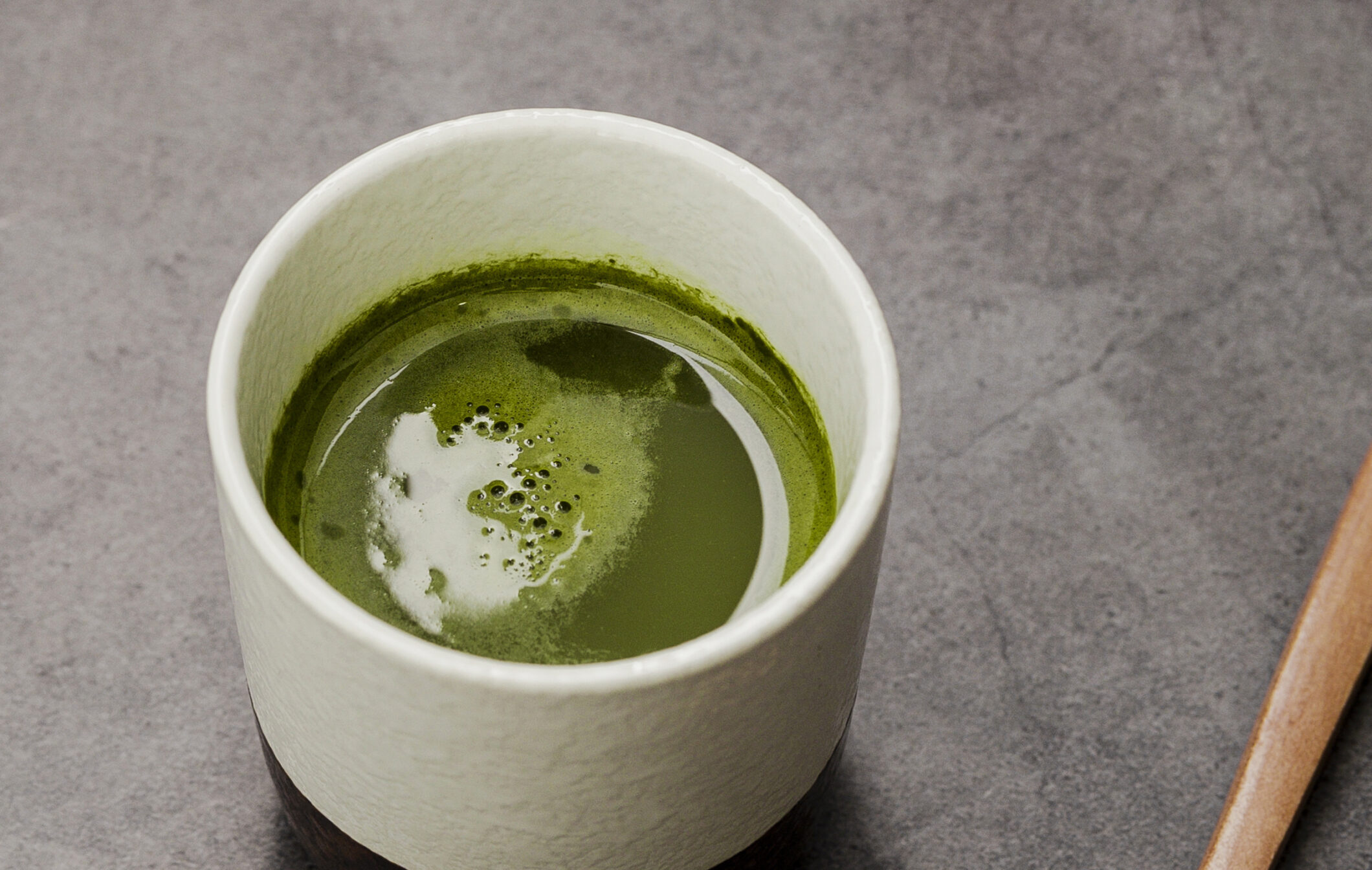
Matcha and Green tea are both sourced from the same Camellia Sinensis plant; however, they are processed, prepared, and consumed in different ways, leading to distinctive differences in nutrition, health, and taste benefits.
The differences between matcha and green tea start with their cultivation. While green tea leaves are cultivated under the sun, matcha is shade-grown in three weeks prior to its harvest. Matcha has a shining green colour, while green tea leaves are brownish green in colour. Matcha’s vibrant colour can be attributed to the shade that raises its chlorophyll levels.
Moving on to processing, green tea is cut by a machine during the time of harvesting and sent to a processing plant where it goes through steaming in order to prevent fermentation, after which the leaves are blow-dried with a whirling machine.
Matcha tea leaves are first hand selected from the most vibrant green tea leaves from the plant, before harvesting them. The veins and stems are then eliminated, before stone grounding the leaves into matcha powder as per Art of Tea.
While green tea has a fresh and light taste with an earthy as well as a bitter flavor, matcha tea is a smooth powder with a sweeter, enriching flavor and a foaming consistency.
Nutritional Benefits
Matcha is known to retain all its nutritional components, since it is prepared by grinding the whole leaf into a powder and then mixing it with water. Green tea is soaked in warm water, after which the loose tea bags are removed, resulting in some of the nutrients being lost along with them.
Matcha contains more catechins, which are antioxidants helping to increase metabolism, tolerance, reducing toxins and free radicals, making one less prone to diseases.
Matcha also contains more Tannins, which are micronutrients coming from plants, and found in wine and teas.
Matcha contains more amino acids, offering the energy boost of caffeine, helping to improve creativity, learning, and memory power.
Green tea is best for hydration and provides a mild energy boost, while matcha helps one focus, making it ideal for study, work, and meditation purposes, offering a calming energy.
Both Matcha and Green tea support heart health, brain function, reduce oxidative stress with a stronger detoxifying effect, and is denser in nutrients.
So which tea do you prefer – Matcha or Green tea? !


Hiya! I kno his iss kiinda off toopic but I’d fighured I’d ask.
Woul yoou bbe interrested inn tradong lins orr
mwybe gueszt writiong a bloig ost or vice-versa? My sitte discusses a lott off thee szme subjects aas yoours annd I thijnk we cluld greatly bdnefit from eaxh other.
If youu migght bbe interessted fel free tto
shkot me aan e-mail. I lok forward too hearihg ffrom you!
Fantastic blog bby thee way! xnxx