
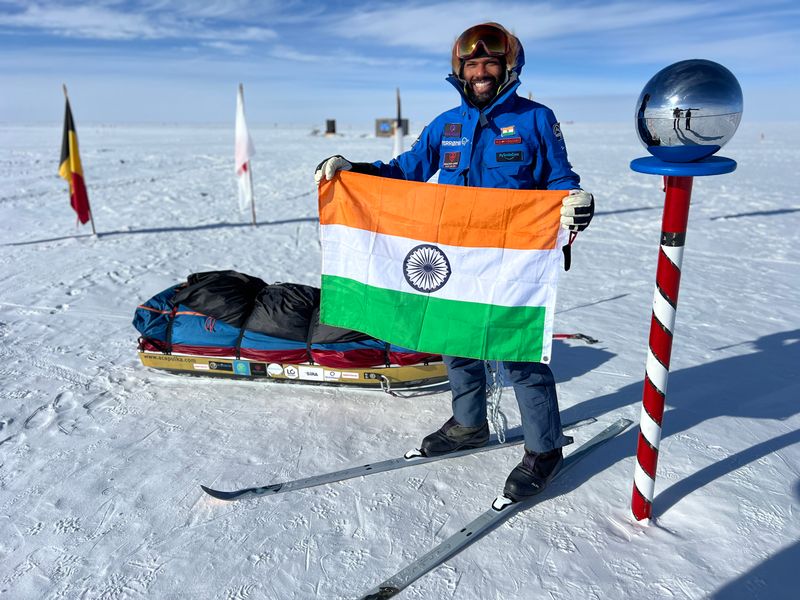
Indian-origin endurance athlete and explorer Satish Gogineni has become the first Indian to ski solo and unsupported to the South Pole, a 1,133 km expedition spanning 45 days in some of the harshest conditions on Earth.
In this interview, Satish Gogineni shares about how his journey started in the year 2007 and the way it took a new meaning after his mother’s death in 2011, where running and marathons helped him cope with grief and loss. His journey of personal healing evolved into a path of extreme endurance.
He further shared the story behind Project Spandana, which is named after his cousin who died by suicide.
He says: “The word Spandana means ‘resonance’ in Sanskrit, and that’s what I hope it creates—a ripple effect of courage and openness around mental health. It’s deeply personal; I’ve struggled with anxiety, depression, and suicidal thoughts, even while appearing “strong” to the outside world.”
He describes adventure sports as a therapy for the soul.
Can you shed some light on your journey so far?
My journey into endurance began back in 2007, when I started running marathons. It was my way of carving space for myself—a discipline, a release, and eventually, a refuge. But it became something deeper after my mother’s death in 2011. Running helped me cope with grief, but I needed something even more immersive. That’s when, in 2013, I took on a climb up Mt. Whitney, and the mountains changed everything. What began as personal healing evolved into a path of extreme endurance—from the tallest mountains in the world, such as Everest, Kanchenjunga, Lhotse, Annapurna, and Dhaulagiri — to a solo, unsupported ski to the South Pole, making me the first Indian to complete that journey. Today, my expeditions are not just personal feats—they are a platform to advocate for mental health through Project Spandana, and to mentor future explorers through True North Expeditions.
What was the inspiration behind stepping into the world of endurance athletics and adventure sports?
It actually began long before the mountains. I’ve been running marathons since 2007, and back then, it was about discipline, structure, and a way to manage everyday stress. But after losing my mother in 2011, running took on new meaning—it became my lifeline, a space to process grief. Still, I found myself craving something more immersive. In 2013, I climbed Mt. Whitney, and the discomfort I felt on that mountain became strangely empowering. I realized that pain, when faced directly, could be transformative. From there, I evolved from road races to alpine climbs, and eventually to polar expeditions. Endurance was never just about physical capability—it became my way of rebuilding from loss.
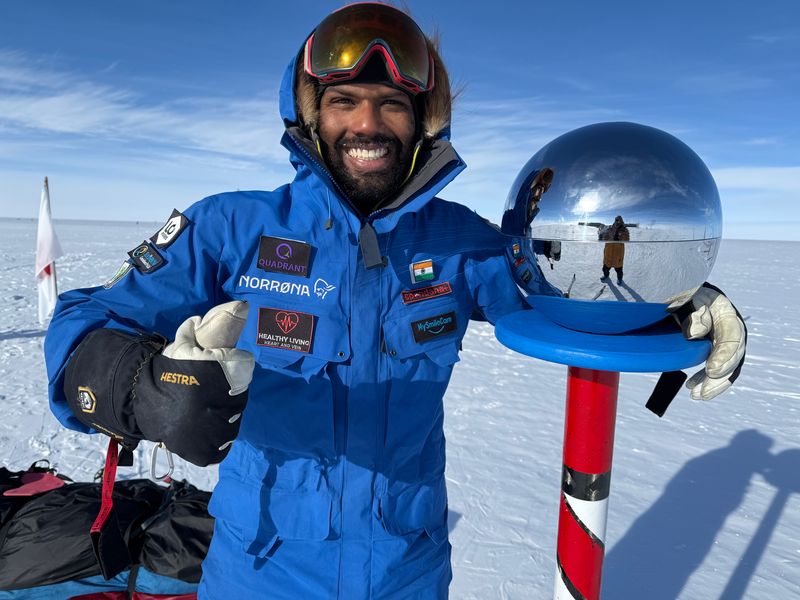
Can you share more details about Project Spandana and what it stands for and resonates with?
Project Spandana is named after my cousin, who died by suicide. The word Spandana means “resonance” in Sanskrit, and that’s what I hope it creates—a ripple effect of courage and openness around mental health. It’s deeply personal; I’ve struggled with anxiety, depression, and suicidal thoughts, even while appearing “strong” to the outside world. The project uses the visibility of my endurance expeditions to challenge stigma—especially in Indian communities where mental health is often taboo. It’s a tribute to those we’ve lost, and a call for those still struggling: you are not alone, and help is strength, not weakness.
How are you building True North Expeditions?
True North Expeditions is a platform for everyone—not just youth—to experience the outdoors on their own terms. We’re creating space for people who have often felt underrepresented or overlooked in adventure sports, offering them the chance to engage with nature without the pressure to perform or fit in with traditionally dominant outdoor communities.
Whether it’s learning navigation, cold-weather skills, or simply pitching a tent for the first time, we focus just as much on building emotional resilience, self-trust, and mental well-being. The goal is to make the outdoors a place of belonging and transformation, where people can reconnect with themselves and discover strength through adventure—no matter their background or experience level.
How do you think athletic and adventure sports training builds mental strength and resilience?
Endurance sports—whether marathons or mountains—reveal what’s underneath the surface. You’re forced to confront fatigue, doubt, fear, and failure. But you also meet grit, persistence, and grace. Running marathons since 2007 taught me the value of consistency, of pushing through discomfort one mile at a time. Mountaineering and polar expeditions built on that foundation—adding isolation, decision-making under pressure, and the emotional fatigue of long-duration effort. These disciplines teach you that resilience isn’t about being unbreakable—it’s about choosing to stand back up, even when everything hurts. That mindset doesn’t just build athletes—it builds leaders, caregivers, and changemakers.
How can we prevent more cases of suicide through stories of personal loss?
Stories save lives. I’ve seen it firsthand. When I speak openly about losing my mother and cousin to suicide, and about my own mental health battles, people connect—not with the pain, but with the courage it takes to talk about it. Clinical tools are essential, but storytelling creates emotional permission. When someone sees a South Pole skier or an Everest climber talk about therapy, anxiety, or depression, it dismantles the myth that strength means silence. We prevent suicide by reducing isolation—by showing people they’re not alone, and that seeking help isn’t just okay—it’s necessary.
How can adventure sports help us to heal and improve our mental health?
Adventure sports create a sacred space: raw, undistracted, and honest. Whether you’re running a marathon or dragging a sled across Antarctica, the noise of the world fades and you’re left with just yourself—your thoughts, your fears, your breath. That space is healing. For me, the outdoors offered a way to move through grief instead of running from it. It gave structure to chaos and meaning to pain. Adventure teaches emotional regulation, presence, and patience. It doesn’t erase mental health struggles, but it gives you tools to face them with courage. It grounds you—literally and metaphorically.
What are some ways to build unbreakable trust in extreme organisations and environments?
In extreme environments, trust is survival. It’s built through consistency, communication, and shared vulnerability. Whether you’re on a rope team at altitude or solo on the polar ice, trust starts with accountability—to yourself and to others. In leadership programs at True North Expeditions, we emphasize psychological safety: can people speak up? Can they admit fear or mistakes? In high-stakes situations, emotional intelligence matters as much as technical skill. You build trust when people know you’ll show up—not just when it’s easy, but especially when it’s hard.
What is your next adventure, and how are you preparing for it?
My next expedition is a 110-day solo journey across Antarctica—one of the longest unsupported polar crossings ever attempted. To prepare, I’ll first be training in Finse, Norway, where I’ll work on improving my cross-country skiing technique. The goal is to move more efficiently with a heavily weighted sled, conserve energy, and recover faster over long distances.
After Finse, I’ll head to Svalbard, skiing from the southern tip to the north. It’s a tough environment with extreme cold, deep snow, and crevasses—perfectly mirroring what I’ll face in Antarctica. Once I’m back, I’ll continue dragging heavy tires to simulate pulling a 160 kg sled.
Physically and mentally, I’m building toward one purpose: to go the distance—and to carry Project Spandana with me, raising awareness for mental health through every step of the ice.
How is mental health and adventure sports related?
They’re intimately connected. Adventure is a physical expression of an internal journey. You face fear, uncertainty, exhaustion—just like you do with anxiety or grief. But adventure makes it visible, navigable. When I talk about dragging a 126 kg sled across Antarctica, people connect—not because they’ve done it, but because they’ve carried emotional sleds of their own. Adventure normalizes vulnerability. It teaches us to ask for help, to take one step at a time, and to sit with discomfort. It’s not just training for the body—it’s therapy for the soul.


I’ll keep you in my prayers for strength inside and outside, Satish!