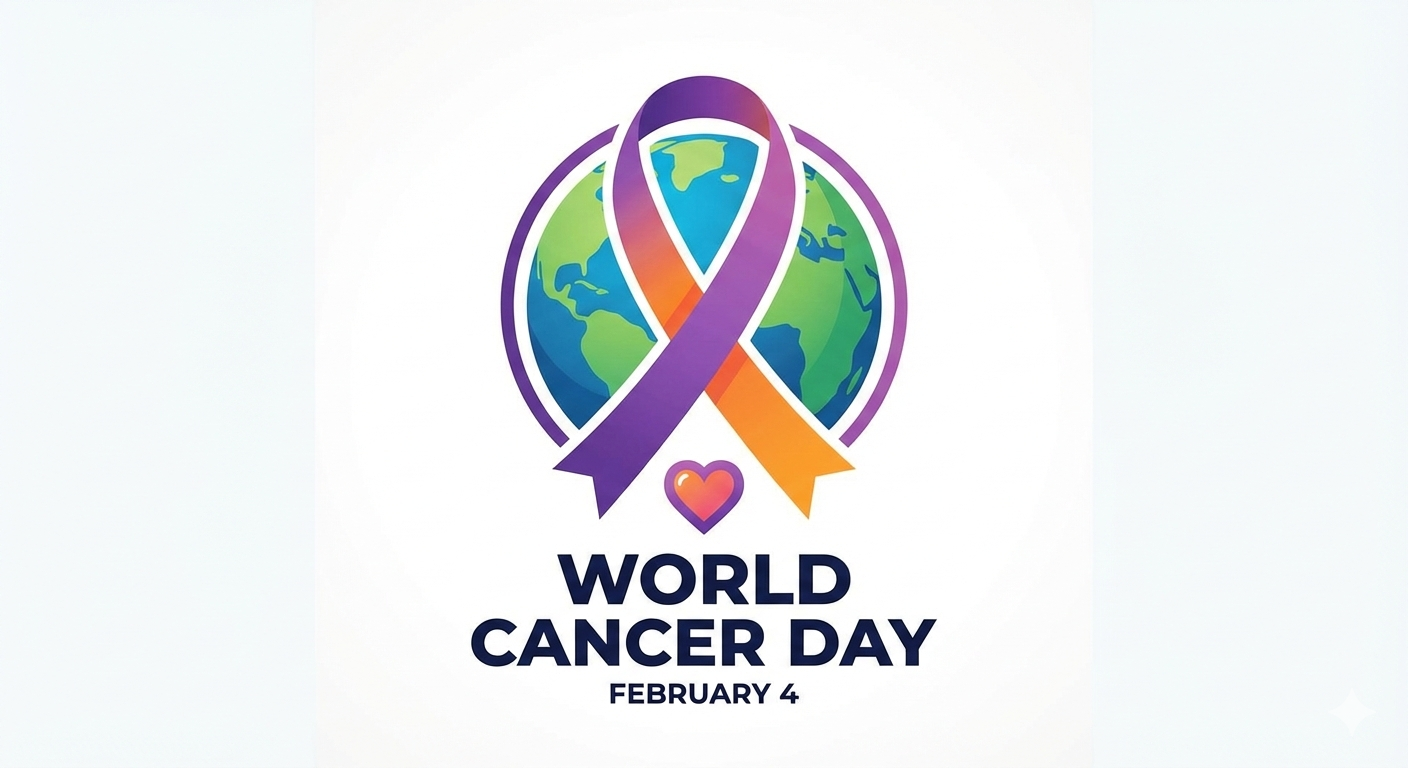
World Cancer Day is observed every year on February 4. This year, the global theme for World Cancer Day is ‘United by Unique’, placing people, their needs and experiences at the centre of cancer care at every stage. This marks a transition in oncology from an entirely disease-focused approach to one that takes into account the social, emotional, and lifelong impact of cancer on patients as well as their families.
By the year 2026, the number of new cancer cases in India is estimated to reach nearly 0.935 million for women and 0.934 million for men, with women experiencing a slightly greater or almost equal incidence rate in comparison to men. The leading cancers for women are breast, ovarian, cervical cancer, while for men, they are lung, prostate, mouth and others.
Some of the factors causing cancer include tobacco usage, unhealthy diets, lack of physical activity, excessive alcohol intake, exposure to radiation, certain viruses, genetics and others.
The World Cancer Day theme this year – United by Unique, recognises the fact that no two individuals’ journeys are the same when it comes to cancer. The experience that each person encounters on their cancer journey is impacted by the cancer type, age, diagnosis stage, family support, environmental circumstances, emotional resilience and access to medical support as well as care. As per a study, the disease may be carrying the same name, however the impact that it has on one’s identity, life and wellbeing is profoundly personal.
‘United by Unique’ thus encourages the global health community to give importance to individual voices, respecting personal journeys, and to devise therapies addressing the person as a whole and not only the tumour. Often, patients and their families go through difficult times and emotional distress while navigating their cancer journey, where they may tend to withdraw from society, given the seriousness of the disease and in instances where adequate societal and psychological support are not present.
Stigma related to cancer adds to that, and that needs to be addressed by the public health community. Along with medical treatment and medical support, psychosocial support should also be extended towards cancer patients and their families, regardless of their age, gender, addressing not only the medical aspect of the recovery process, but also the psychological aspect. This will make patients feel supported, cared for, conveying the fact that they are still an integral member of the society, where the latter does care about their recovery and wellbeing. Thus, it is considered that the future of oncology should be based on people-centric care.
People-centred cancer care emphasises addressing the medical condition of each patient, taking into account their lives, priorities and values, with personalised treatment, targeted therapy and integration of chronic pain management, psychological support, rehabilitation, nutrition, etc.
Early detection and preventive healthcare form the basis of effectual cancer care, since identification of cancer at the early stages leads to an improvement in treatment outcomes, reducing the severity of treatment required, helping to improve the chances of survival and enhancing quality of life. It is essential to empower people with the knowledge and awareness surrounding early detection of cancer, including the early warning signs, regular screening, removing stigma and fear, and stressing the importance of a healthy lifestyle with guidance and education on cancer preventive measures.
On the occasion of World Cancer Day, Ankeet Dave, Founder & Director at Access Life, shared: “World Cancer Day reminds us that childhood cancer is not just a medical challenge, it is an emotional, social, and psychological journey for the entire family. At Access Life, we support children undergoing cancer treatment by providing safe accommodation near hospitals, nutritious meals, transport support, counselling, education continuity, and a stable, caring environment that truly feels like home.”
He further added: “Equally important is our work with parents and caregivers, who often carry immense stress and uncertainty while supporting their child through treatment. By creating a community of care, we aim to ensure that no family has to navigate this journey alone. At our centres, we also organise live music performances, magic shows, puppet shows, and family fun activities that bring moments of joy, reduce stress, and help children and their families feel a sense of normalcy and togetherness during treatment. On World Cancer Day, Access Life reaffirms its commitment to standing beside children fighting cancer and their families at every step of their treatment journey. We are actively running awareness drives across our centres, on social media platforms, and in corporate offices, schools, colleges, and high-footfall public spaces such as malls to reach wider communities. Through these initiatives, we aim to spread knowledge about early detection, timely treatment, and the importance of holistic support systems. We are proud to partner with healthcare providers, volunteers, and supporters who share our vision of ensuring that every child receives the care, dignity, and opportunity they deserve during treatment and beyond. We are also looking forward to celebrating International Childhood Cancer Day on 15th February, continuing our efforts to raise awareness and strengthen support for young fighters and their families. Together, we can build a world where every child with cancer is supported with hope, care, and the chance to thrive.”